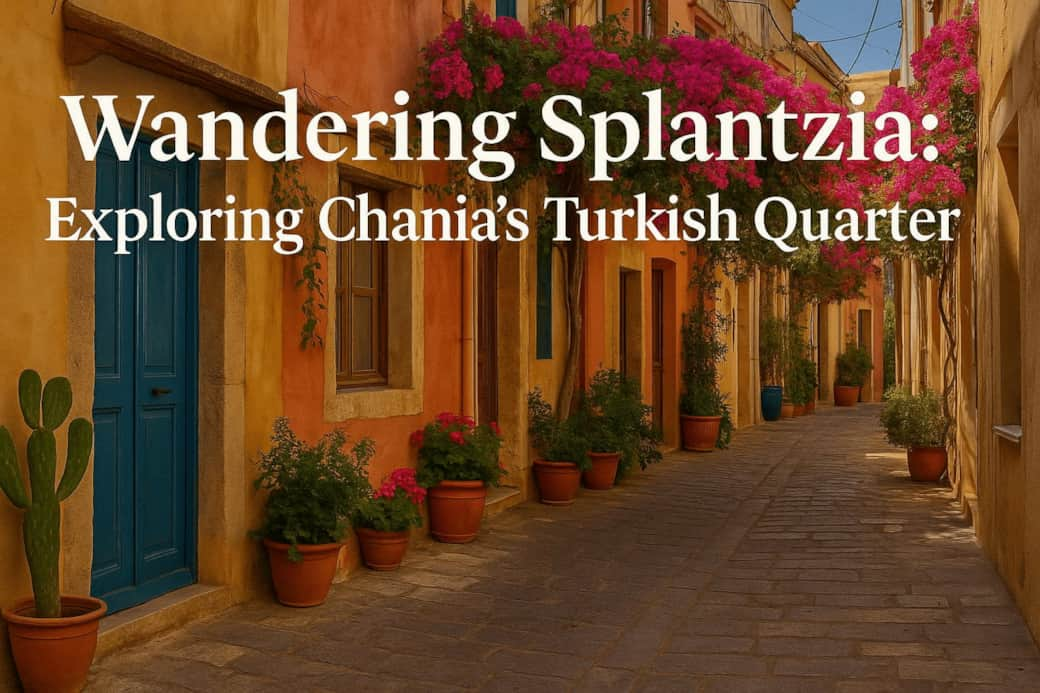
I bought my house in Splantzia in 2006, when the neighbourhood was still deciding what it wanted to be.
There were grandmothers then. You would see them in the mornings, moving slowly through the alleys with shopping bags, or sitting outside their doors watching the street the way people watch something they have known their whole lives. Their grandchildren played in the square under the plane tree, the same square where Ottoman residents once gathered, where the Church of St. Nicholas stands with its bell tower built over a former minaret — two faiths, one building, the kind of detail that Splantzia offers constantly if you are paying attention.
There were also empty houses. Many of them. Buildings with their shutters closed and their stone faces crumbling quietly, waiting. The neighbourhood carried both things at once: the warmth of the people still living there and the silence of the ones who had left.
Twenty years later, Splantzia has found its answer. The buildings have been restored carefully, mostly; and the neighbourhood has regained the life that was slowly leaving it. Tavernas and small guesthouses have opened in houses that were ruins when I first walked these streets. What I value most about what happened here is that it did not erase the place. The same faces still appear. In summer the neighbourhood fills with visitors who have found their way off the harbour and into the streets where people actually live. But in the off-season, when the rhythm returns to normal, you see who Splantzia really belongs to. The grandmothers are fewer now. But the feeling they carried, of a neighbourhood that knows itself, has survived.
Heading: The Landmarks That Tell the Story
The Church of St. Nicholas in Splantzia Square is the most visible example of what this part of Chania has always been: a place where different histories did not cancel each other out but accumulated. The bell tower was added after the church was reclaimed from use as a mosque. Both are still there.
Near the square, the Ottoman fountain stands in a small alcove — stone, worn smooth, Arabic inscriptions still legible if you look. It was a practical object once, a place where the neighbourhood came to draw water. Now it is easy to walk past without noticing. Do not walk past without noticing.
Down toward the Venetian Harbour, the Küçük Hasan Mosque — known locally as Yiali Tzami — sits at the water’s edge, its dome visible from the harbour promenade. It is an exhibition space now, but the building itself is the exhibition. Walk inside when it is open.
On Daskalogianni Street, the Ahmet Aga Minaret rises alone above the rooflines, the mosque it once belonged to long gone. It is the kind of remnant that stops you mid-stride if you come around the corner unprepared.
How to Walk It
Walk slowly. That is the only instruction Splantzia requires. The alleys are narrow enough that you cannot be in a hurry, and the neighbourhood rewards the people who are not. Take the turning off Sorvolou Street into Parados Sorvolou. Find the small square with the Church of Agia Irini — a Byzantine church you enter by walking down three stone steps, which tells you something immediately about how many layers this neighbourhood is built upon. The square also holds the Well of the Turk and several small hotels, and it is quiet enough that you can sit on a bench in front of the church and simply watch the light move across the stone. Fifteen metres down the laneway connects you to Daliani Street, which is one of the main arteries of Splantzia and full of restaurant choices — extremely busy in summer, and a completely different and better experience in the off-season when the tables thin out and the neighbourhood reclaims it.
Stay in the Middle of It
If you are staying with us, you are already inside everything described in this piece. Our studios sit on Parados Sorvolou, steps from the Church of Agia Irini and the Well of the Turk, a short walk from Splantzia Square and the Venetian Harbour. We have been walking these streets for twenty years. We know which corner has the best light in the evening and which house has the most interesting story behind its restored facade. Ask us. That knowledge is part of what you are booking when you stay in Splantzia.